Hancock County Dog Registration Information
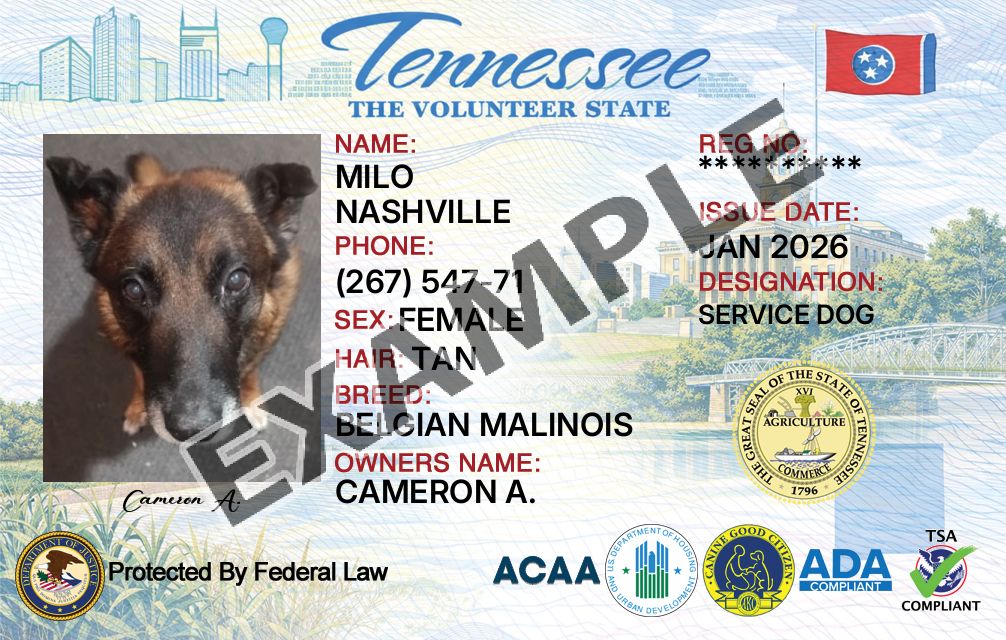
Service Dogs and Emotional Support Animals in Hancock, Tennessee
If you’re searching where do I register my dog in Hancock County, Tennessee for my service dog or emotional support dog, the first thing to know is that there are usually two different concepts involved: (1) local dog licensing (often tied to rabies vaccination and local animal control rules) and (2) a dog’s legal status as a service dog or an emotional support animal (ESA). In most places, a service dog or ESA still follows the same local vaccination and licensing rules as other dogs, even though service dogs have specific public-access rights under disability law.
Where to Register or License Your Dog in Hancock County, Tennessee
The offices below are the best starting points to confirm dog licensing requirements in Hancock County, Tennessee, including whether tags are handled through county government, animal control, public health, or a combination. If you live inside a specific municipality (such as Sneedville), ask whether city rules add any additional requirements beyond the county’s.
Hancock County Health Department
Notes: Tennessee county health departments commonly handle rabies-related administration and may be able to tell you how Hancock County issues rabies tags or how local animal control licensing is coordinated. If you are trying to confirm what proof is needed for a dog license in Hancock County, Tennessee (for example, a current rabies certificate), this is a practical place to start.
Hancock County Courthouse (County Offices)
Notes: In many Tennessee counties, the courthouse is where residents go for county administration and records. If you are asking where to register a dog in Hancock County, Tennessee, the courthouse can help direct you to the correct office (for example, the appropriate clerk, trustee, or another designated county office) if dog licensing is handled through county government rather than animal control or the health department.
- Which office issues (or coordinates) the animal control dog license in Hancock County, Tennessee
- Whether a county dog license/tag is required, and how renewals work
- What proof is required (especially rabies vaccination documentation)
Overview of Dog Licensing in Hancock County, Tennessee
What “dog registration” usually means locally
When people say “register my dog,” they usually mean getting a local dog license (sometimes called a tag). A local license helps animal control and public health officials identify dogs and verify rabies vaccination status. Even if your dog is a service dog or an emotional support dog, you may still be expected to follow the same local rules for vaccination and licensing as other dogs.
County vs. city rules (why it matters)
In some areas, county rules apply throughout the county, while city rules may add requirements inside city limits. If you live in Sneedville or another incorporated area, it’s smart to ask whether the city has its own animal ordinance (for example, leash rules, limits on the number of animals, or separate tags). If you live outside city limits, you’re usually dealing with county-level rules.
No universal “service dog registry” requirement
Service dogs are recognized based on disability law definitions and the dog’s training to perform tasks that mitigate a disability—not based on being listed in a government database. Emotional support animals can be recognized for certain housing purposes with appropriate documentation, but they do not have the same public-access rights as trained service dogs.
What You Need Before Registering a Dog
Common requirements you may be asked to provide
While specific dog licensing requirements in Hancock County, Tennessee should be confirmed with the offices listed above, most local dog licensing programs commonly ask for the items below.
- Proof of current rabies vaccination (certificate from a veterinarian)
- Owner identification (such as a driver’s license or photo ID)
- Proof of residency in Hancock County (sometimes requested)
- Dog description details (name, color, age, sex, breed mix)
- Spay/neuter documentation (if licensing fees differ based on altered status)
- Payment for any licensing fee (amount and accepted payment methods can vary)
Rabies vaccination and tags
Many local licensing processes are tied to rabies control. Even when licensing is handled by a courthouse office, the proof you submit is often a current rabies certificate. If your dog is newly vaccinated, ask how soon the vaccination is considered valid for licensing purposes and whether a rabies tag number must be included on the application.
Steps to Register or License a Dog in Hancock County, Tennessee
Step-by-step (typical process)
- Confirm the correct office for your address (county vs. city limits) using the “Where to Register or License” section above.
- Gather your documents, especially your dog’s current rabies vaccination certificate.
- Ask if an application form is required and whether you can complete it in person, by mail, or through a county process (availability varies by locality).
- Pay the licensing fee (if applicable) and confirm what type of tag or receipt you should keep.
- Attach the tag to your dog’s collar if a physical tag is issued, and keep a copy/photo of key documents for your records.
If your dog is a service dog or emotional support dog
Your licensing steps typically stay the same. What changes is how you handle documentation for the dog’s role:
- Service dog: focus on training and task work that mitigates a disability; keep records that help you manage real-world situations (e.g., vaccination history, emergency contact, and training notes), even if the law does not require a specific ID card.
- ESA: if you need an ESA accommodation for housing, keep an ESA letter (when applicable) and your dog’s health/vaccination records; an ESA letter is separate from licensing.
Service Dog Laws in Hancock County, Tennessee
What makes a dog a service dog (in practical terms)
A service dog is generally understood as a dog that is individually trained to perform specific tasks for a person with a disability. The task(s) must directly relate to the person’s disability (for example, guiding, alerting, retrieving, interrupting harmful behaviors, or providing mobility support). Service dog status is not created by buying a vest, an ID card, or adding the dog to a database.
Local licensing vs. service dog access rights
Local dog licensing is mainly about public health and animal control. Service dog public-access rules are about disability access. These are separate categories:
- You may need to get a dog license in Hancock County, Tennessee even if your dog is a service dog.
- Businesses and public places generally focus on behavior and the dog being under control, not on a “registration number.”
- Health and safety rules (such as rabies vaccination) can still apply to service dogs the same way they apply to other dogs.
Quick comparison: Dog license vs. service dog vs. emotional support animal
| Category | What it is | Typical proof | Where handled |
|---|---|---|---|
| Dog License | Local registration/tag program tied to animal control and/or public health. Often used to confirm rabies vaccination and identify owned dogs. | Commonly a rabies vaccination certificate, owner info, and payment (if applicable). | County/city office, animal control, and/or local health department (varies by location). |
| Service Dog | A dog individually trained to do work or perform tasks for a person with a disability. | Training and task performance; no single universal government registry is required. | Not “registered” through a universal federal office; local licensing may still apply as it does for other dogs. |
| Emotional Support Animal (ESA) | An animal that provides comfort by being with a person; typically relevant for certain housing accommodations. | When needed for housing, documentation from a qualified healthcare professional may support an accommodation request. | Not “registered” through a universal federal office; local licensing may still apply as it does for other dogs. |
Emotional Support Animal Rules in Hancock County, Tennessee
What an ESA is (and isn’t)
An emotional support animal (ESA) generally refers to an animal that helps a person by providing emotional comfort. ESAs are commonly discussed in the context of housing accommodations. Unlike service dogs, ESAs do not automatically have the same public-access rights in places like restaurants, stores, or other public-facing businesses.
How ESA documentation relates to local registration
If your question is “where do I register my dog in Hancock County, Tennessee for my emotional support dog,” it helps to separate two tracks:
- Local dog licensing: you may need a county or city dog license/tag (often tied to rabies vaccination). This is typically handled by local government/animal services.
- ESA accommodation documentation: if you’re requesting a housing accommodation, you may need a letter or documentation from a qualified healthcare professional. That documentation is not the same thing as a dog license.
Practical tips for residents
- Keep your dog’s vaccination records current, especially rabies documentation.
- If you need an ESA accommodation for housing, keep your documentation organized and be ready to share it with a housing provider as part of an accommodation request (as applicable).
- For county questions like “animal control dog license Hancock County, Tennessee,” start with the offices listed above and ask who issues tags/licenses for your exact address.
Frequently Asked Questions
Do I have to license a service dog in Hancock County, Tennessee?
Often, yes. Service dogs commonly still follow local public health and animal control rules such as rabies vaccination and any applicable local licensing requirements. To confirm the current local rule for your address, contact the offices in the “Where to Register or License Your Dog in Hancock County, Tennessee” section.
Is there a federal registry for service dogs or emotional support animals?
No. There is not one universal federal government registry where you must register a service dog or ESA. A service dog’s status is based on disability law definitions and training to perform tasks. An ESA is typically supported by documentation for housing accommodations when applicable.
What documents should I bring when I try to register or license my dog?
A safe starting set is: your dog’s rabies vaccination certificate, your photo ID, and any proof of residency that the office might request. If your dog is spayed/neutered and fees differ, bring that documentation too.
If I live in Sneedville, do I follow city rules or county rules?
You may need to follow both. Some requirements are set countywide, while municipalities can add local rules (for example, leash or nuisance ordinances). Ask the county office which rules apply to your address and whether any city-specific steps apply within Sneedville.
I’m still not sure where to register a dog in Hancock County, Tennessee. Who should I call first?
Start with the Hancock County Health Department at 423-733-2228 and ask which office issues dog licenses/tags for Hancock County residents, what documents are required, and whether any city-specific requirements apply where you live.
Register A Dog In Other Tennessee Counties
Select your county below to get started with your dog’s ID card. Requirements and license designs may vary by county, so choose your location to see the correct options and complete your pup’s registration.
- Anderson County Dog Registration
- Bedford County Dog Registration
- Benton County Dog Registration
- Bledsoe County Dog Registration
- Blount County Dog Registration
- Bradley County Dog Registration
- Campbell County Dog Registration
- Cannon County Dog Registration
- Carroll County Dog Registration
- Carter County Dog Registration
- Cheatham County Dog Registration
- Chester County Dog Registration
- City of Hartsville County Dog Registration
- City of Lynchburg County Dog Registration
- City of Nashville County Dog Registration
- Claiborne County Dog Registration
- Clay County Dog Registration
- Cocke County Dog Registration
- Coffee County Dog Registration
- Crockett County Dog Registration
- Cumberland County Dog Registration
- Davidson County Dog Registration
- Decatur County Dog Registration
- DeKalb County Dog Registration
- Dickson County Dog Registration
- Dyer County Dog Registration
- Fayette County Dog Registration
- Fentress County Dog Registration
- Franklin County Dog Registration
- Gibson County Dog Registration
- Giles County Dog Registration
- Grainger County Dog Registration
- Greene County Dog Registration
- Grundy County Dog Registration
- Hamblen County Dog Registration
- Hamilton County Dog Registration
- Hardeman County Dog Registration
- Hardin County Dog Registration
- Hawkins County Dog Registration
- Haywood County Dog Registration
- Henderson County Dog Registration
- Henry County Dog Registration
- Hickman County Dog Registration
- Houston County Dog Registration
- Humphreys County Dog Registration
- Jackson County Dog Registration
- Jefferson County Dog Registration
- Johnson County Dog Registration
- Knox County Dog Registration
- Lake County Dog Registration
- Lauderdale County Dog Registration
- Lawrence County Dog Registration
- Lewis County Dog Registration
- Lincoln County Dog Registration
- Loudon County Dog Registration
- Macon County Dog Registration
- Madison County Dog Registration
- Marion County Dog Registration
- Marshall County Dog Registration
- Maury County Dog Registration
- McMinn County Dog Registration
- McNairy County Dog Registration
- Meigs County Dog Registration
- Monroe County Dog Registration
- Montgomery County Dog Registration
- Moore County Dog Registration
- Morgan County Dog Registration
- Obion County Dog Registration
- Overton County Dog Registration
- Perry County Dog Registration
- Pickett County Dog Registration
- Polk County Dog Registration
- Putnam County Dog Registration
- Rhea County Dog Registration
- Roane County Dog Registration
- Robertson County Dog Registration
- Rutherford County Dog Registration
- Scott County Dog Registration
- Sequatchie County Dog Registration
- Sevier County Dog Registration
- Shelby County Dog Registration
- Smith County Dog Registration
- Stewart County Dog Registration
- Sullivan County Dog Registration
- Sumner County Dog Registration
- Tipton County Dog Registration
- Trousdale County Dog Registration
- Unicoi County Dog Registration
- Union County Dog Registration
- Van Buren County Dog Registration
- Warren County Dog Registration
- Washington County Dog Registration
- Wayne County Dog Registration
- Weakley County Dog Registration
- White County Dog Registration
- Williamson County Dog Registration
- Wilson County Dog Registration